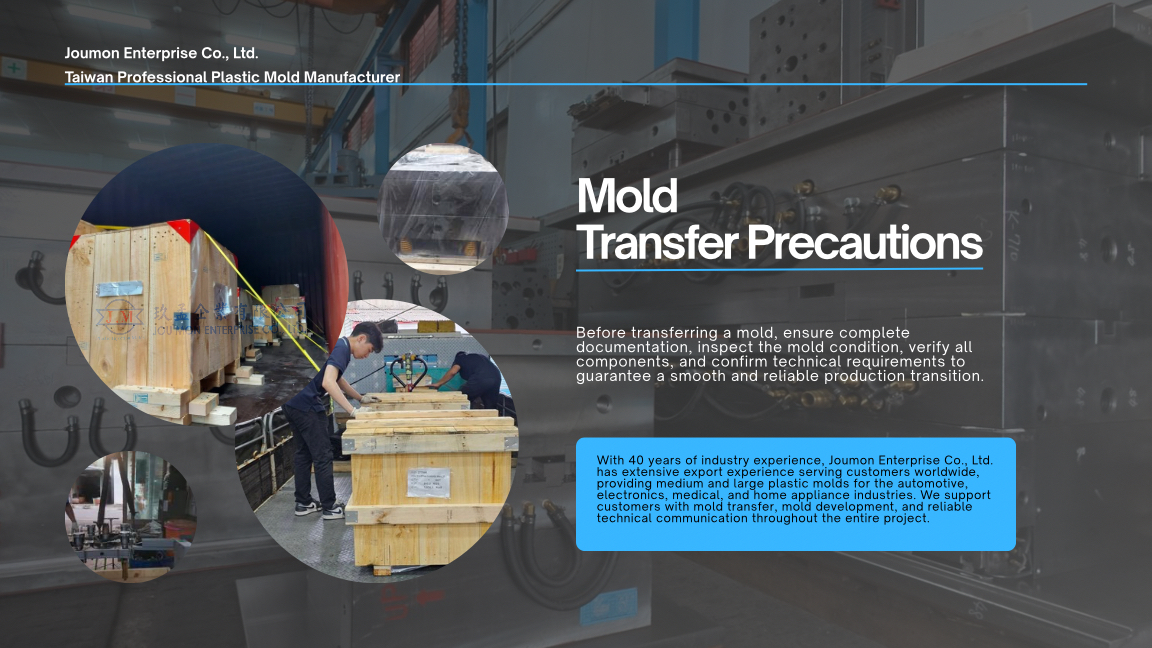
Mold Transfer Precautions | Plastic Mold Relocation, Rust Protection, and Shipping Guide
As products continue into long-term mass production, many companies eventually face the need for mold transfer due to production relocation, supply chain adjustments, factory changes, or the original mold maker no longer supporting the project.
However, plastic injection molds — especially medium and large molds — are precision tooling systems. Improper handling during transportation, packaging, or overseas shipping may lead to corrosion, damage, or production instability after relocation.
For this reason, proper inspection and protection procedures are strongly recommended before mold transfer.
Basic Inspection Before Mold Transfer
Before relocating a mold, it is important to inspect its overall condition, including:
-
Whether the mold is still running properly
-
Mold cavity and core wear condition
-
Slider and ejector system operation
-
Hydraulic or hot runner system functionality
-
Missing components or spare parts
-
Availability of 2D and 3D mold drawings
For molds that have been in production for many years, basic cleaning and maintenance are recommended before shipment to prevent existing issues from worsening during transportation.
Rust Protection Is Extremely Important
One of the most common issues during mold relocation or overseas shipping is rust and moisture damage.
This is especially important for sea freight shipments or humid environments such as Taiwan and Southeast Asia.
Common rust prevention methods include:
-
Applying anti-rust oil to mold steel surfaces
-
Spraying rust preventive agents inside the mold
-
Wrapping the mold with VCI anti-rust paper
-
Securing moving components to prevent impact damage
-
Using moisture-proof protective wrapping
For ocean shipments, additional protection may include:
-
Desiccants inside packaging
-
Vacuum sealing
-
Moisture barrier film wrapping
These protection methods help reduce corrosion risk during long transportation periods.
Mold Packaging and Wooden Crate Considerations
Plastic molds can weigh from several hundred kilograms to multiple tons, making proper packaging and lifting protection extremely important.
During packaging and transportation, attention should be paid to:
-
Export-compliant wooden crate requirements
-
Crate structural strength
-
Internal mold fixation to prevent movement
-
Proper lifting balance and center of gravity
-
Forklift and crane handling space
Insufficient fixation during transportation may result in internal component damage caused by vibration or impact.
Trial Runs After Mold Transfer
Even when using the same mold, production conditions may vary between factories and injection molding machines.
After mold relocation, trial runs are usually required to verify:
-
Injection molding conditions
-
Cooling performance
-
Hot runner temperature settings
-
Injection pressure and speed
-
Product dimensions and surface quality
In some cases, process adjustments may be necessary to restore stable production quality.
Why Companies Choose Mold Transfer
Common reasons for mold relocation include:
-
Changing mold suppliers
-
Improving production quality or lead time
-
Manufacturing relocation
-
Supply chain restructuring
-
Reducing logistics costs
-
Mold refurbishment and maintenance requirements
For this reason, experienced mold transfer support requires not only tooling knowledge, but also production troubleshooting and mold maintenance capabilities.
JOUMON Enterprise Co., Ltd. | Medium and Large Plastic Mold Transfer Support
JOUMON Enterprise Co., Ltd. specializes in medium and large plastic injection molds and provides support for mold transfer, mold maintenance, mold refurbishment, and production trial assistance.
Our services include:
-
Mold inspection and evaluation
-
Rust prevention and export packaging
-
Mold shipping and transportation arrangement
-
Mold repair and refurbishment
-
Trial molding and production support
Through a complete mold transfer process, we help reduce transportation risks and support stable production after relocation.